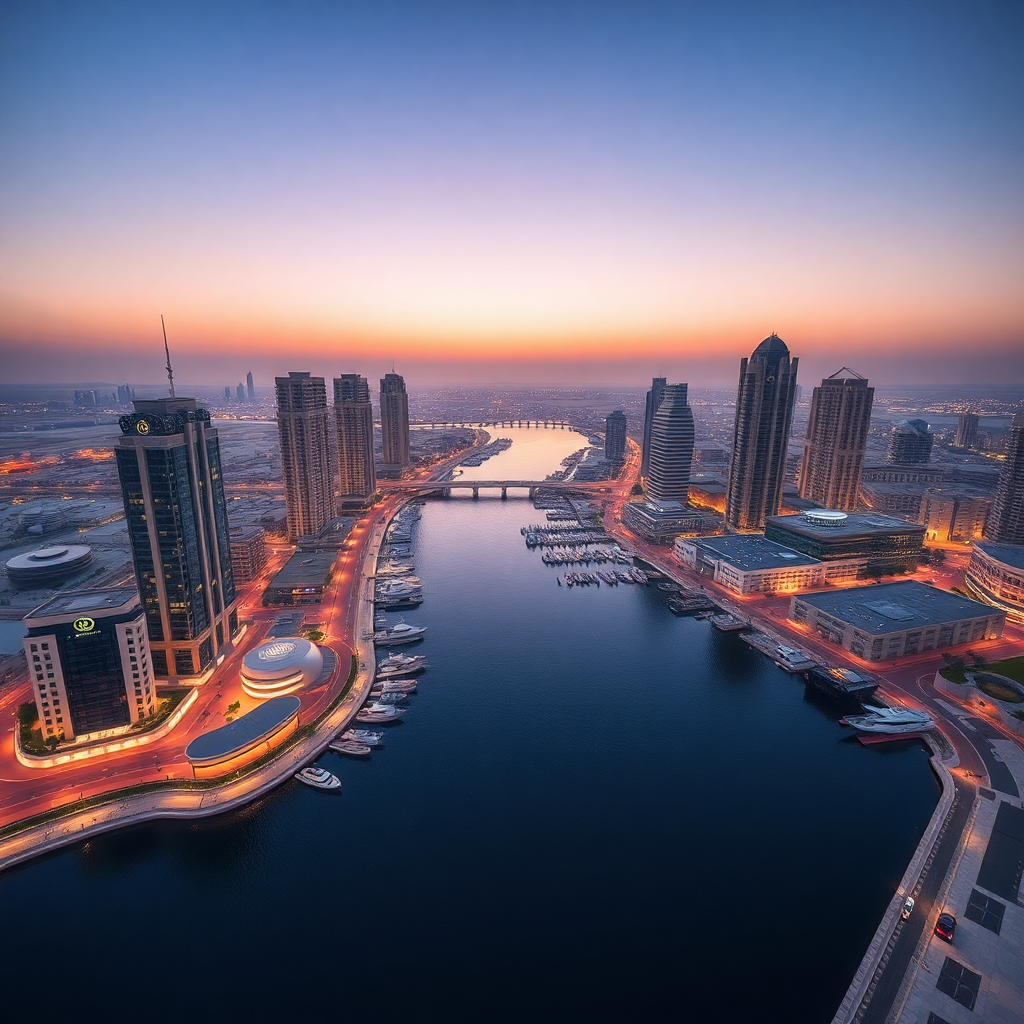
A budget of around $500,000 makes it possible to consider a quality apartment in either Dubai Creek Harbour or Downtown Dubai, but the investment logic differs. Downtown is a mature centre with global recognition. Creek Harbour is a developing waterfront master community where investors are betting on future infrastructure and the district’s growth.
Downtown Dubai: an established premium location
Downtown is associated with Burj Khalifa, Dubai Mall, and the city’s central tourist flow. It has a high concentration of completed infrastructure, restaurants, hotels, and offices.
Advantages
- an internationally recognised district brand;
- strong demand from tourists and tenants;
- a large number of comparable transactions;
- strong liquidity for quality properties;
- short-term rental potential in suitable buildings.
Risks
- a high entry price;
- expensive service charges in some projects;
- significant differences between buildings in age and quality;
- less potential for the district to be “discovered,” as the infrastructure is already established;
- noise and tourist activity may not suit every tenant.
In Downtown, the view, walking distance to key destinations, and building management are especially important. An apartment without a strong distinguishing feature may compete with many similar listings.
Dubai Creek Harbour: a bet on development
Creek Harbour is being developed as a modern waterfront district with residential neighbourhoods, promenades, and future infrastructure. It offers more new buildings and a consistent architectural identity.
Advantages
- a modern environment and new buildings;
- water, promenades, and a family-oriented setting;
- potential growth as the district develops;
- a calmer atmosphere than Downtown;
- the opportunity to select a property at an early stage.
Risks
- some infrastructure is still under development;
- dependence on the master plan’s implementation timeline;
- a large volume of future supply;
- transport accessibility may change as the district develops;
- rental forecasts for new buildings are less reliable.
Creek Harbour suits investors who are prepared to wait and assess results over a longer horizon.
What the same budget can buy
In Downtown, this budget often means a smaller area, an older building, or a compromise on the view. In Creek Harbour, it may secure a newer property, a better layout, or a waterfront view, but the investor accepts the risk of an unfinished surrounding environment.
The comparison should focus not on size alone, but on the efficiency of the layout. A smaller apartment in a strong Downtown tower may be more liquid than a larger but standard unit in a district with substantial new supply.
Rental demand
Downtown attracts tourists, professionals, entrepreneurs, and tenants who value a central location. Demand is diversified, although high running costs can reduce net returns.
Creek Harbour is aimed at families, couples, and tenants who prefer a calm waterfront environment. As infrastructure opens, the tenant profile may broaden. However, when several buildings are handed over at once, owners may compete on price.
Growth potential
Downtown is more focused on capital preservation through the scarcity of premium views and prestigious addresses. Growth is possible, but the investor is paying for value that is already established.
Creek Harbour offers greater potential for repricing if the master plan is implemented successfully. Future growth, however, is not guaranteed: it depends on infrastructure, the broader market, and the volume of new supply.
Exit liquidity
Downtown buyers are easier to attract because of the district’s recognition. In Creek Harbour, the advantages of the specific project and the district’s prospects need to be explained. In both locations, the best assets are not simply apartments, but rare combinations of view, layout, floor level, and building quality.
A possible $500,000 strategy
An investor prioritising capital preservation and current rental income may choose a completed Downtown property while carefully controlling service charges. An investor with a five-to-seven-year horizon who is prepared to wait may prefer Creek Harbour.
Another option is not to allocate the entire budget to one expensive unit, but to consider splitting capital between a completed property and an off-plan purchase, provided the payment structure and risks allow it.
Conclusion
Downtown is a bet on established centrality, brand, and liquidity. Creek Harbour is a bet on a new urban environment and future growth. The choice depends on what matters more to the investor: current certainty or development potential.

Vlad Muravyev
Real estate market analyst
Specializes in UAE property investment, international education, and visa support. Helps clients from Russia, the CIS, Africa, and China find the right solutions.


